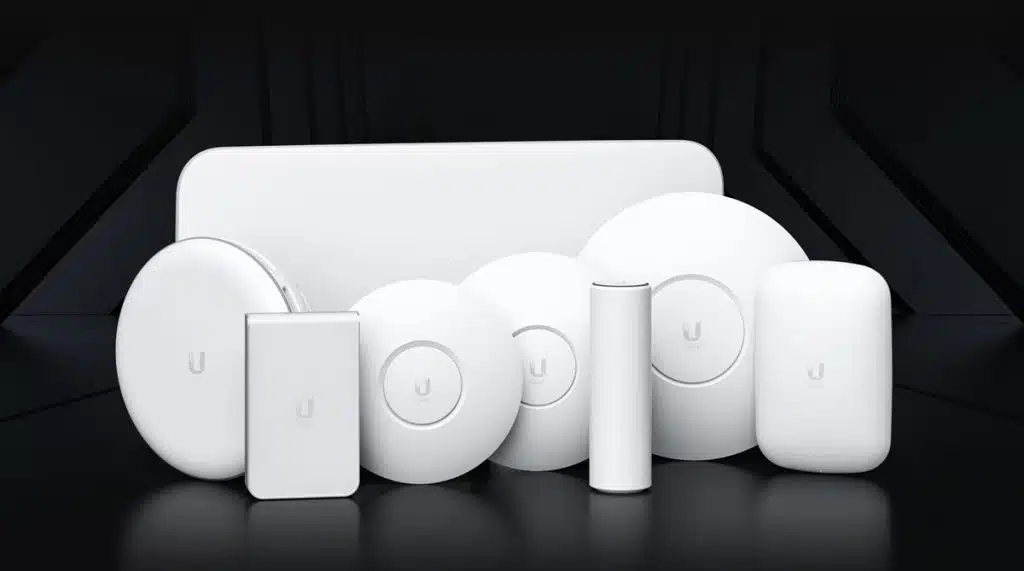
Why Specifying Ubiquiti on Form 470 Quietly Costs Districts More
Ubiquiti's sticker price is compelling — but the absence of price protection, channel inventory, and enterprise support produces structurally unattractive economics for the experienced partners districts most want bidding their work.
A consumer brand in an enterprise environment
Ubiquiti has built a successful business democratizing networking hardware for SOHO and prosumer users. The trouble starts when that same equipment is specified for a K-12 network serving thousands of users — requiring enterprise-grade reliability, scalability, security policy enforcement, and ongoing professional management.
Aruba, Cisco, Ruckus, Fortinet, and other enterprise vendors built channel programs around supporting partners who deploy and manage their equipment. Ubiquiti has not — because its go-to-market model does not require one.
When experienced E-Rate partners pass on Ubiquiti specifications — or price them in ways that make them less competitive — it is rarely arbitrary. There are five well-understood reasons.
1. No price protection across a 7-month window
E-Rate timelines routinely span seven months between Form 470 filing and equipment purchase. A partner who quotes Ubiquiti in December commits to pricing that may shift meaningfully by July, with no vendor program to absorb the difference.
2. Inventory volatility with no escalation path
MET has watched Ubiquiti-specified projects stall because a single SKU was unavailable in the necessary quantity. There is no account-level inventory program, no prioritized fulfillment, no channel manager to call.
3. Margins too thin to absorb risk
Ubiquiti pricing is built to be compelling to end users — which means the margin available to a partner deploying it is extremely thin, and any unexpected delay or labor overrun erodes the project's economics quickly.
4. No enterprise support program
When a partner hits a complex production issue on Aruba, Cisco, Ruckus, or Fortinet gear, there is a TAC ticket and an escalation path. With Ubiquiti, the support model is community forums and Reddit — not appropriate as the primary backstop for a school network.
5. Long-term lifecycle exposure
Software updates, security patching, and feature continuity on consumer-oriented hardware do not match the cadence enterprise networks require. The savings at purchase are frequently spent — and exceeded — over the project lifecycle.
Naming Ubiquiti narrows the bid pool
Specifying Ubiquiti by name does not create the certainty it appears to. It restricts the competitive pool to vendors willing to bid that brand — which tends to exclude the most experienced and capable E-Rate partners. The result is a narrower bid process that may surface fewer proposals, less experienced bidders, or bids that compensate for the structural risks with pricing that eliminates the cost advantage the specification was meant to capture.
Consumer-spec vs. enterprise-spec
Write a performance spec, not a brand spec
The practical takeaway is not that Ubiquiti should be blacklisted. It is that the specification process deserves more deliberate attention than it usually receives. A performance-based 470 — describing throughput, coverage, security, scalability, and support requirements — opens the door to genuine competition and almost always produces better outcomes for the district.
Rethinking your next Form 470?
MET helps Wisconsin districts write performance-based specifications, model total cost of ownership, and deliver enterprise-grade networks with vendor-backed support — not community forums.