VoIP vs. Traditional Phone Systems: The 2026 Decision Guide

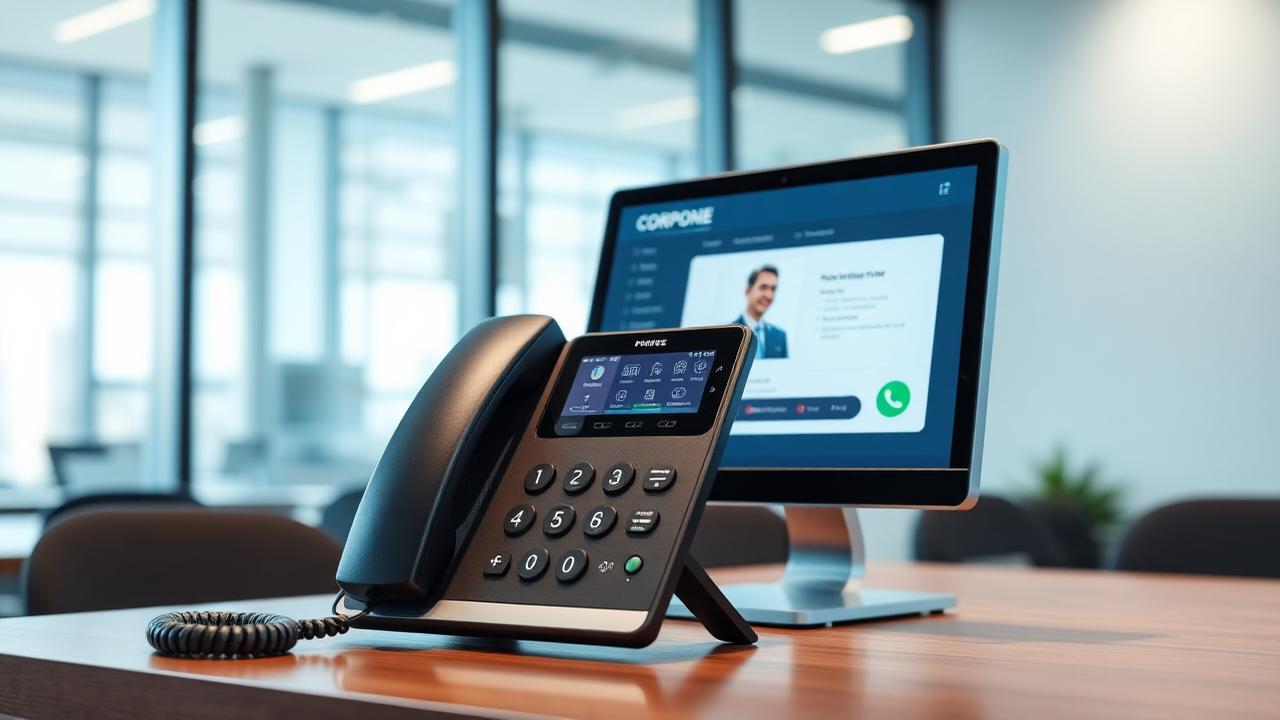
The question isn't whether VoIP is better than traditional phone systems — it's whether your business is ready to make the switch. For most organizations, the answer is a resounding yes. But "most" isn't "all," and the decision deserves more nuance than the typical vendor pitch provides. I've deployed hundreds of phone systems across every major platform — 3CX, RingCentral, Microsoft Teams, Cisco, and legacy Avaya — and the right answer depends entirely on your specific environment, requirements, and constraints.
The State of Business Communications in 2026
The telecommunications landscape has shifted dramatically in the past five years. The FCC's ongoing copper retirement program has accelerated the decommissioning of traditional POTS (Plain Old Telephone Service) lines across the country. Major carriers are actively sunsetting ISDN PRI services. The infrastructure that traditional phone systems depend on is literally being dismantled.
Simultaneously, internet reliability and bandwidth have improved to the point where quality concerns that were legitimate five years ago are now largely irrelevant for most business locations. Fiber-to-the-premises is available in most commercial areas. SD-WAN technology provides intelligent traffic routing that prioritizes voice packets. QoS (Quality of Service) implementations on modern network equipment ensure that voice quality remains consistent even during periods of heavy data usage.
Cost Comparison: The Full Picture
The financial comparison between traditional and VoIP phone systems extends far beyond monthly per-line costs. Let me break down the total cost of ownership for a 50-user organization over five years, based on actual client deployments.
Traditional PBX — Five-Year TCO
- ·Hardware: $50,000–$80,000 for the PBX chassis, line cards, and desk phones
- ·Installation: $5,000–$15,000 for structured cabling, configuration, and programming
- ·Monthly line costs: $30–$50 per line × 50 lines = $1,500–$2,500/month ($90,000–$150,000 over 5 years)
- ·Maintenance contract: $200–$500/month ($12,000–$30,000 over 5 years)
- ·Long-distance and international: Variable, typically $500–$2,000/month ($30,000–$120,000 over 5 years)
- ·Moves, adds, and changes: $75–$150 per change, typically 5–10 per month ($22,500–$90,000 over 5 years)
- ·System upgrades: $10,000–$25,000 every 3–5 years
- ·Five-year total: $219,500–$510,000
Cloud VoIP — Five-Year TCO
- ·Hardware: $0–$10,000 (many users use softphones; desk phones $50–$200 each)
- ·Installation: $2,000–$5,000 for configuration and network optimization
- ·Monthly subscription: $15–$35 per user × 50 users = $750–$1,750/month ($45,000–$105,000 over 5 years)
- ·Maintenance: Included in subscription
- ·Long-distance and international: Typically included or $0.01–$0.05/minute ($0–$6,000 over 5 years)
- ·Moves, adds, and changes: Self-service through admin portal ($0)
- ·System upgrades: Automatic, included in subscription
- ·Five-year total: $47,000–$126,000
The cost savings are significant — typically 50–75% — but cost alone shouldn't drive the decision. Let me walk through the feature comparison that matters more than the spreadsheet.
Feature Comparison: What Actually Matters
Modern VoIP platforms deliver capabilities that traditional systems simply cannot match, because they're built on fundamentally different architecture. Traditional PBX systems process calls through dedicated hardware. VoIP platforms process calls through software, which means they can be updated, extended, and integrated in ways that hardware-based systems cannot.
Unified Communications is the most impactful differentiator. A modern UC platform combines voice calling, video conferencing, team messaging, file sharing, and screen sharing in a single application. Your employees don't need a separate desk phone, a separate video tool, a separate chat tool, and a separate file-sharing service. They have one application that handles all communication modalities, with presence information that shows colleagues' availability in real time.
The productivity implications are substantial. Studies consistently show that unified communications reduce the time employees spend switching between communication tools by 30-40 minutes per day. Across 50 employees, that's 250 hours per month of recaptured productivity.
Remote work capability has moved from nice-to-have to non-negotiable since 2020. A cloud VoIP system makes every employee's laptop or smartphone a fully functional business phone — complete with their business number, call recording, voicemail transcription, and CRM integration. Traditional PBX systems can technically support remote workers through VPN-connected IP phones, but the user experience is poor, the administration is complex, and the reliability depends on VPN stability.
Auto-attendant and IVR functionality on modern platforms is dramatically more capable than traditional implementations. AI-powered attendants can understand natural language, route calls based on caller history, provide estimated wait times, and offer callback options — without requiring complex programming or expensive add-on modules.
Analytics and reporting provide visibility into call patterns, agent performance, queue metrics, and customer experience that traditional systems simply cannot deliver. Real-time dashboards show call volume, average handle time, abandonment rates, and service level adherence. Historical reports enable data-driven decisions about staffing, training, and workflow optimization.
CRM integration automatically logs calls, displays customer information during inbound calls (screen pops), enables click-to-dial from contact records, and synchronizes call recordings with customer accounts. This integration eliminates manual call logging, reduces average handle time, and ensures that every customer interaction is documented.
When to Stay Traditional
There are legitimate reasons to maintain traditional phone service, and I would be doing a disservice to my clients if I didn't acknowledge them:
Unreliable internet connectivity. If your location has a single internet connection with frequent outages or inconsistent quality, VoIP will deliver a poor experience. Voice quality requires less than 100ms latency, less than 1% packet loss, and sufficient bandwidth (approximately 100Kbps per concurrent call). If your internet can't consistently meet these thresholds, traditional phone service is more reliable.
However, I'd argue that unreliable internet is itself a business problem that should be solved — through redundant connections, SD-WAN, or carrier upgrades — rather than used as a reason to maintain legacy systems.
Regulatory requirements. Some industries and some specific applications legally require POTS lines. Elevator emergency phones, fire alarm panels, and certain building security systems may require analog connections by code. These requirements are diminishing as regulators update standards, but they still exist in many jurisdictions.
Extremely high-security environments. Organizations handling classified information or operating in high-security contexts may have requirements that preclude cloud-based communications. These are edge cases, but they exist.
The Hybrid Approach
Many of our clients adopt a hybrid model during transition — and some maintain it permanently. The approach is straightforward:
- ·Deploy cloud VoIP for the majority of users (desktops, softphones, mobile apps)
- ·Maintain analog lines for elevator phones, fire panels, fax machines, and alarm systems
- ·Implement a Session Border Controller (SBC) to bridge the two systems
- ·Use SIP trunking to reduce costs on remaining analog lines
This approach captures 90% of the cost savings and feature benefits while maintaining compliance and compatibility where it matters. Over time, as regulatory requirements evolve and analog-dependent systems are replaced, the traditional components are retired naturally.
The Migration Process
A successful VoIP migration follows a predictable process that we've refined over hundreds of deployments:
- 01Discovery (Week 1): Document current call flows, extension assignments, auto-attendant scripts, hunt groups, and integration requirements
- 02Design (Week 2): Create the new system architecture, including user licensing, phone provisioning, and network requirements
- 03Network assessment (Week 2-3): Verify bandwidth, QoS configuration, switch PoE capacity, and firewall rules
- 04Build (Week 3-4): Configure the new system in parallel with the existing system
- 05Testing (Week 4): Validate every call flow, every extension, every integration in a pilot group
- 06Training (Week 4-5): Train administrators and end users on the new platform
- 07Cutover (Week 5): Port numbers and switch production traffic — typically during a weekend
- 08Optimization (Weeks 6-8): Monitor call quality metrics, adjust QoS settings, and refine call flows based on real-world usage
The entire process typically takes 5-8 weeks, and the cutover itself is seamless — users arrive Monday morning with their same phone number, a better system, and usually a significantly lower monthly cost.
My Recommendation
For the vast majority of businesses in 2026, cloud VoIP is the clear winner. The cost savings are substantial, the feature advantages are dramatic, the reliability question has been answered, and the traditional infrastructure these systems depend on is being actively decommissioned.
If you're still running a traditional PBX, the question isn't whether you'll migrate — it's whether you'll migrate proactively, with planning and testing and a smooth cutover, or reactively, when your carrier notifies you that your ISDN PRI is being discontinued in 90 days.
I strongly recommend the proactive path.